

How to Manage Stormwater Around Your Home — and Get Help Paying for It
The next time it pours, grab an umbrella and take a walk around your house.
Watch where the water coming off your roof goes. Look for streams running through the yard, mulch moving out of landscape beds, puddles that don't drain and soil washing down slopes. You might learn more about how your property handles water in ten minutes of heavy rain than you would on a sunny afternoon.
That's one of the tips we picked up while visiting a local stormwater project with Jeff Reiland, owner of Abundant Design.
At this particular home, water wasn't getting into the basement. Instead, years of runoff were gradually changing the yard itself.
When Rainwater Starts Reshaping Your Yard
For homeowners Andy and Shauna, the first signs appeared about three years ago.
They began noticing serious erosion along the slopes of their walkout backyard. The following spring, they tried planting new grass, but couldn't keep it alive. The erosion continued.
"We were quickly losing the grass on the hills on the side of the house and noticing erosion into the stream," they told us.
At that point, simply planting more grass wasn't going to solve the underlying problem. They needed to address how water was moving through the property.
Giving the Water Somewhere to Go
Andy and Shauna turned to Jeff and the team at Abundant Design, a Central Iowa landscaping company whose work includes sustainable landscape design, rain gardens, native landscaping and stormwater solutions.
They already knew Jeff personally, but their research into Waukee's stormwater programs provided some additional reassurance. Jeff was one of the contractors recommended through the program, and Andy and Shauna said the city also spoke highly of his work.
The solution goes beyond repairing the areas that have washed away.
Underground drainage lines are being used to collect and redirect stormwater to a designated area of the property. Rock, natural landscaping and plants suited to the conditions help turn that destination into part of the landscape rather than simply a place to discharge water.
A rain garden is also incorporated into the project, along with waterfall features.
Andy and Shauna said they're excited to see more natural landscaping and local plants incorporated into their yard. What they're looking forward to most is "a beautiful backyard full of natural plants, along with the beautiful waterfall features and the rain garden."
It's a good example of something homeowners may not consider: a solution to a drainage problem doesn't necessarily have to look like a drainage solution.
Don't Just Fix the Damage — Follow the Water
When grass disappears or mulch continually washes out of a landscape bed, it's tempting to keep repairing the damage. But if stormwater is causing the problem, those repairs may only be temporary.
Jeff recommends looking at the property as a whole.
During a good rain, check your downspouts and make sure they're carrying water away from the house. Then watch what happens to that water. Does it spread out and soak into the ground, or does it form a stream through the yard? Does it collect somewhere? Is it carrying soil or mulch with it?
The goal isn't necessarily to eliminate water from the landscape. It's to control where that water goes. Depending on the situation, that could mean redirecting downspouts, changing the grading, installing drainage or creating landscaping designed to receive and absorb more water.
What If Water Is Getting Into Your Basement?
Andy and Shauna aren't dealing with basement water, but stormwater problems can sometimes affect the house itself.
If water is getting into your basement, it's important to consider what's happening both inside and outside the home. A basement waterproofing company may address water at the foundation or inside the basement, while a landscaping or drainage professional can evaluate grading, downspouts and how water is moving across the property.
Jeff says the two types of contractors can work together when needed. Rather than treating the basement and yard as completely separate problems, they can help develop a more complete solution for managing the water.
The Right Plant in the Right Place
Landscaping itself can either help with water management or create additional problems.
Jeff recommends choosing plants not only for how they'll look today, but for the conditions where they're being planted and how large they'll eventually become. Giving trees, shrubs and other plants enough room to reach their mature size can prevent problems years down the road.
Root systems matter, too. Jeff points to willow, cottonwood and mulberry as some of the worst offenders when it comes to aggressive roots. Those roots can spread well beyond where the tree was originally planted and potentially cause problems around sewer lines and other underground infrastructure.
For ground cover, Jeff likes to use native sedges and wildflowers, selecting plants that fit the conditions of the site. Areas with sufficient sunlight may also benefit from certain grasses.
The idea is simple: instead of continually fighting the conditions in a particular part of the yard, choose plants that are better suited to them.
Sometimes the Problem Is Under Your Feet
Not every stormwater problem requires installing a drain. Sometimes the soil itself is part of the problem.
Compacted or poor-quality soil doesn't allow water to soak in as readily, which can result in more rainwater running across the surface instead.
One option Jeff discussed is soil quality restoration. The process can include deep-tine aeration several inches into the ground followed by spreading compost across the lawn. The aeration creates openings that allow compost to work into the existing soil, helping improve the condition of the soil and its ability to handle water.
For some properties, improving the soil may be one piece of a larger stormwater-management plan.
Signs Your Yard May Have a Stormwater Problem
You don't need water in your basement to have a drainage problem. Watch for:
Grass that repeatedly dies or won't establish in a particular area
Soil or mulch washing away
Small channels developing through the lawn
Exposed roots
Areas that stay unusually wet after a storm
Water flowing rapidly down slopes
Downspouts emptying where the water can't adequately drain
Erosion along slopes or the edge of the property
Some of these changes happen gradually. Soil settles and compacts, trees mature and landscaping changes, so the way water moves through a property can change over time too.
Your City May Help Pay for Stormwater Improvements
Andy and Shauna's project also highlights something many Central Iowa homeowners don't realize: your community may offer financial assistance for qualifying stormwater improvements.
Programs vary by city, and so do the projects that qualify. Depending on where you live, assistance may be available for improvements such as rain gardens, native landscaping, soil quality restoration, rain barrels and other approved stormwater-management practices.
Central Iowa homeowners can start by checking the program available in their community:
Altoona — Rain Barrel Grant Program
Ankeny — Stormwater Reimbursement Program
Clive — Stormwater Assistance Program
Des Moines — Stormwater Management
Grimes — Storm Water Assistance Grant
Johnston — Homeowner Grant Program
Pleasant Hill — Reimbursement Program
Polk City — Stormwater Program
Urbandale — Storm Water Grant Program
Waukee — Best Management Practices Reimbursement
West Des Moines — Stormwater Reimbursement Programs
Windsor Heights — Best Management Practices Reimbursement
Homeowners in other parts of Polk County can also check programs available through the Polk Soil and Water Conservation District and Polk County's Private Lands and Trees (PLaNT) program.
Iowa's State Revolving Fund (SRF) also provides financing for certain water-quality and stormwater-management projects.
Check Before You Start the Project
There's an important catch: don't complete a project and assume you'll be reimbursed afterward.
Eligibility, funding amounts and application procedures vary by program. Some require an application and approval before work begins.
If you're considering a rain garden, soil restoration, drainage work or another stormwater project, check with your city or program administrator before getting started. You may find that an improvement you're already considering qualifies for assistance.
Want Professional Advice for Your Property?
Figuring out why water is collecting or causing erosion isn't always obvious.
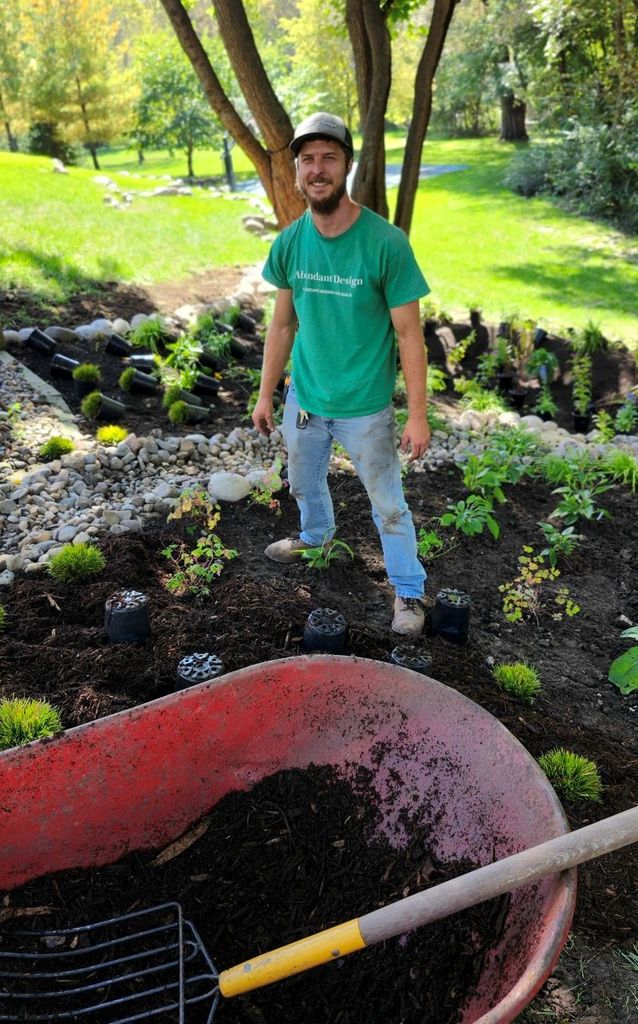
Abundant Design offers a free phone consultation to discuss your property and determine what the next step might be. For homeowners who want an in-person evaluation, the company also offers a $300 on-site consultation that includes advice on a plan forward. If you decide to move ahead with a design, the $300 consultation fee is credited toward the design fee.
Learn more about Abundant Design and its approach to sustainable landscaping and stormwater management.
Take a Walk Outside During the Next Heavy Rain
Bad weather can reveal things about a property that are difficult to see on a sunny day.
The next time a heavy storm rolls through Central Iowa, take a few minutes to walk around your house. Check your downspouts. Watch the slopes. Look for places where water collects or gains speed. Pay attention to soil, mulch and grass that's beginning to wash away.
Then ask yourself one simple question:
Where is all that water going?
Andy and Shauna's backyard is a good reminder that managing stormwater doesn't have to mean simply getting rid of it. With the right approach, water can be redirected to a place designed to handle it—and the solution can become an attractive part of the landscape at the same time.
Check out this article next